Guide
How to Use the PSA Method Calculator
The PSA Method Calculator is not a one-click sensitivity converter. It works by using your own in-game feedback, one round at a time.
The most important rule is simple: do not click through the calculator without testing in your game. For each round, the calculator gives you a lower and higher sensitivity value. Test both values in-game, return to the calculator, then choose the one that feels easier to control.
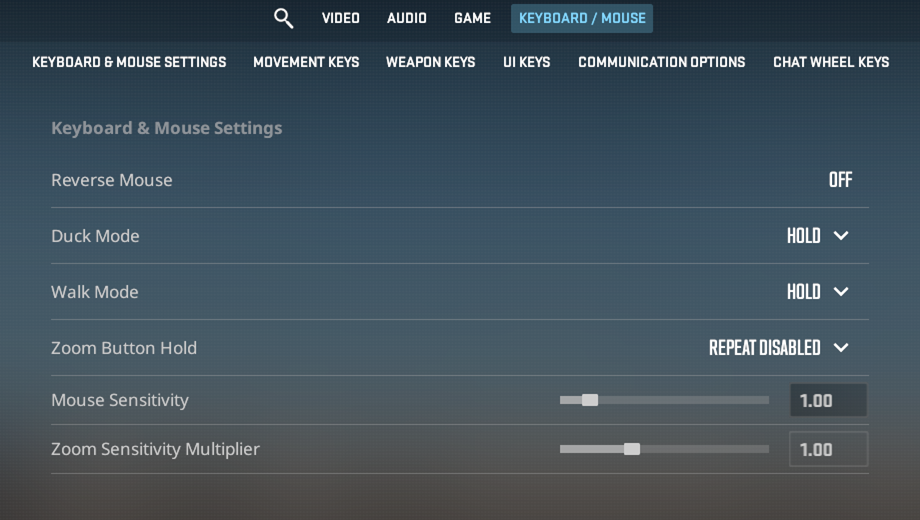
Step 1: Enter your current sensitivity
Open the calculator and enter the sensitivity you already use in your game. In this example, the starting CS2 sensitivity is 1.00. Keep your DPI and mouse setup the same while you test.
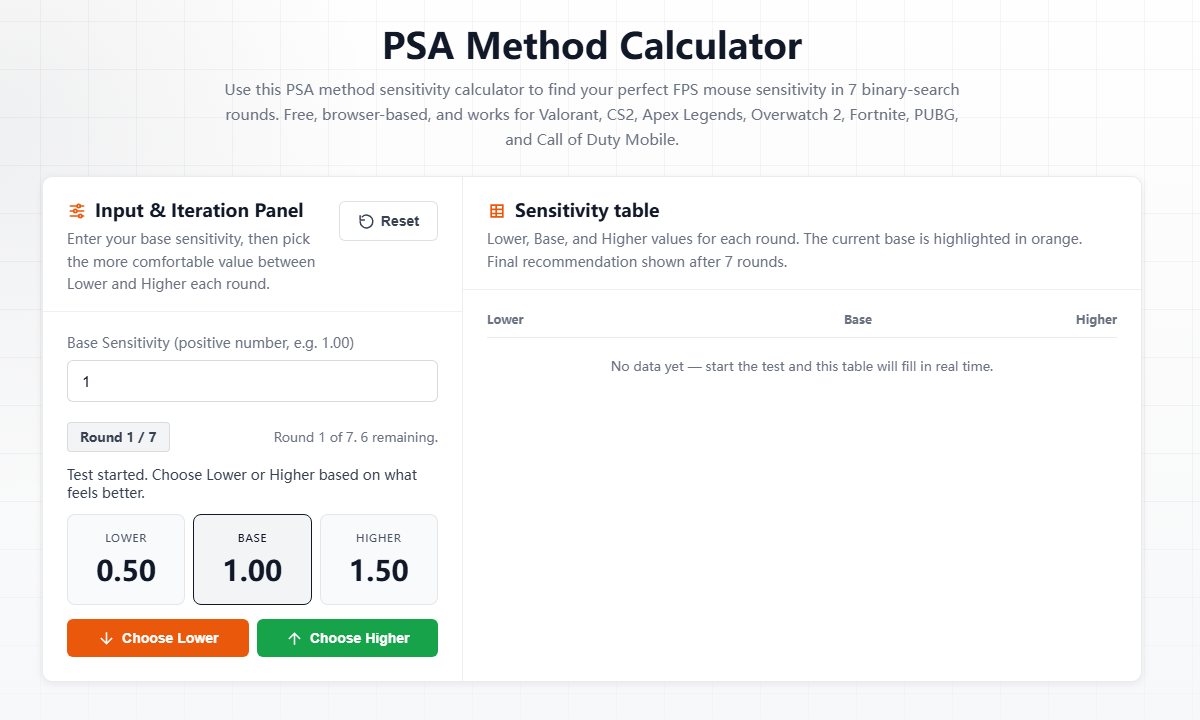
Step 2: Test Lower and Higher in-game
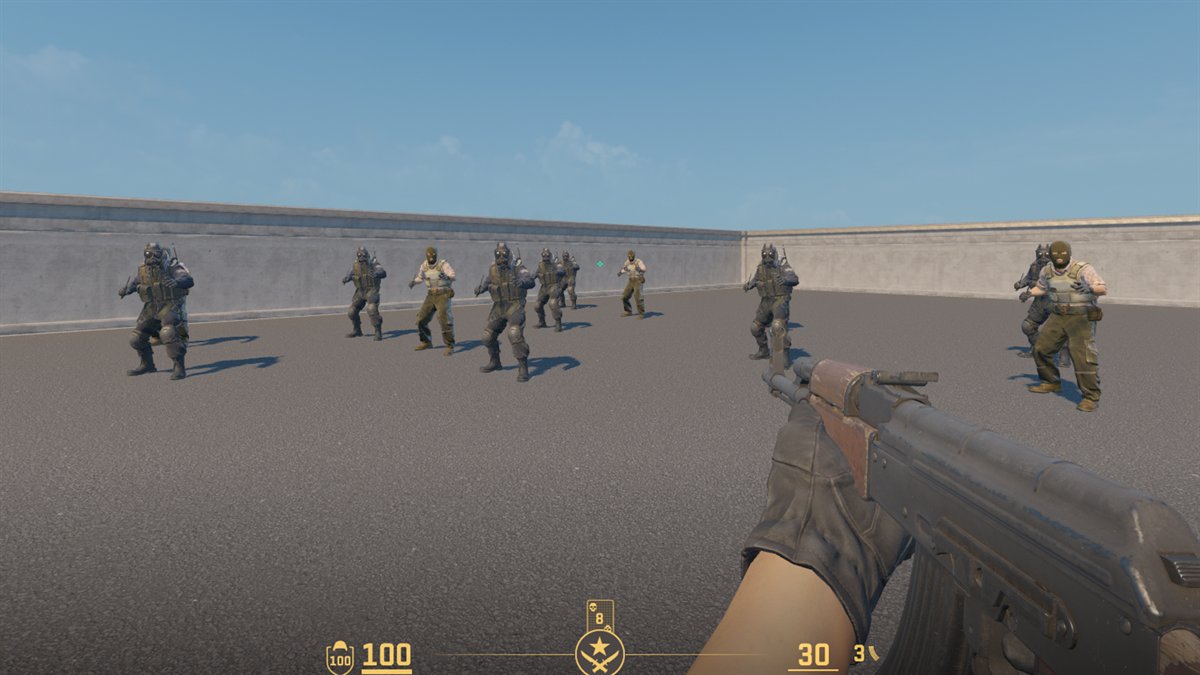
Copy the lower value into your game and test it in the same practice environment. Then copy the higher value and test again. Try not to judge by one lucky shot. Pay attention to tracking, flicks, micro-adjustments, and whether you overshoot the target.
Use a repeatable test drill
A PSA round is only useful when both candidates are tested under similar conditions. Use the same map, same weapon, same crosshair, same DPI, same resolution, and roughly the same posture for every comparison. In CS2, that might mean a short bot routine, recoil reset practice, and a few angle-clearing movements. In Valorant or another FPS, use a range drill or aim trainer task that includes both large turns and small corrections.
You do not need to spend twenty minutes on every candidate, but you should give each value enough time to reveal a pattern. A practical rule is to test each side for 30 to 90 seconds in the same drill. If the two values feel close, repeat the comparison once before choosing. The calculator can narrow the range, but it cannot fix rushed input.
How to decide between Lower and Higher
Do not choose only because one candidate produced a highlight shot. Look for the setting that is easier to repeat. A lower sensitivity often feels steadier for micro-corrections and holding angles, while a higher sensitivity may feel more natural for fast turns or wide flicks. The better choice is the one that gives you fewer forced corrections across several attempts.
- Choose Lower if the higher value makes you overshoot targets or fight your crosshair.
- Choose Higher if the lower value feels sluggish, late, or physically cramped.
- If both feel similar, repeat the same drill and choose the value that feels easier to control when you are tired.
Step 3: Return to the calculator and choose
After testing both values, return to the calculator. If the lower value felt more stable, choose Lower. If the higher value felt more natural, choose Higher. The calculator then creates the next round.
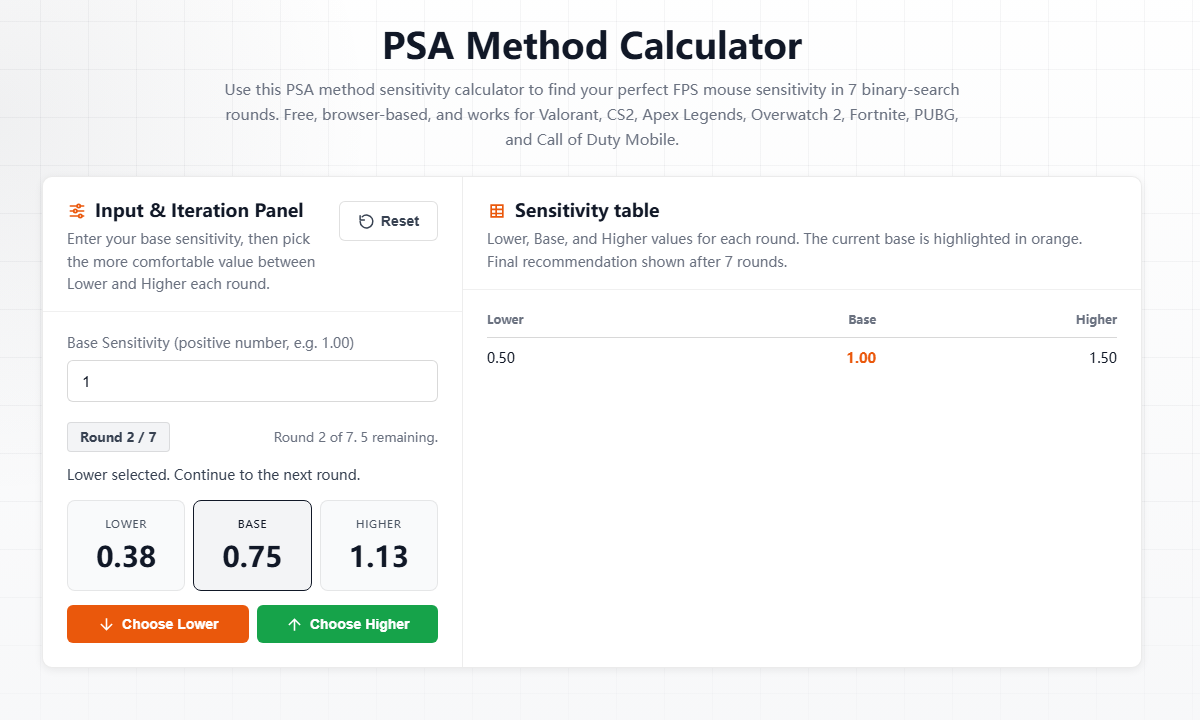
Example: a 7-round sensitivity test
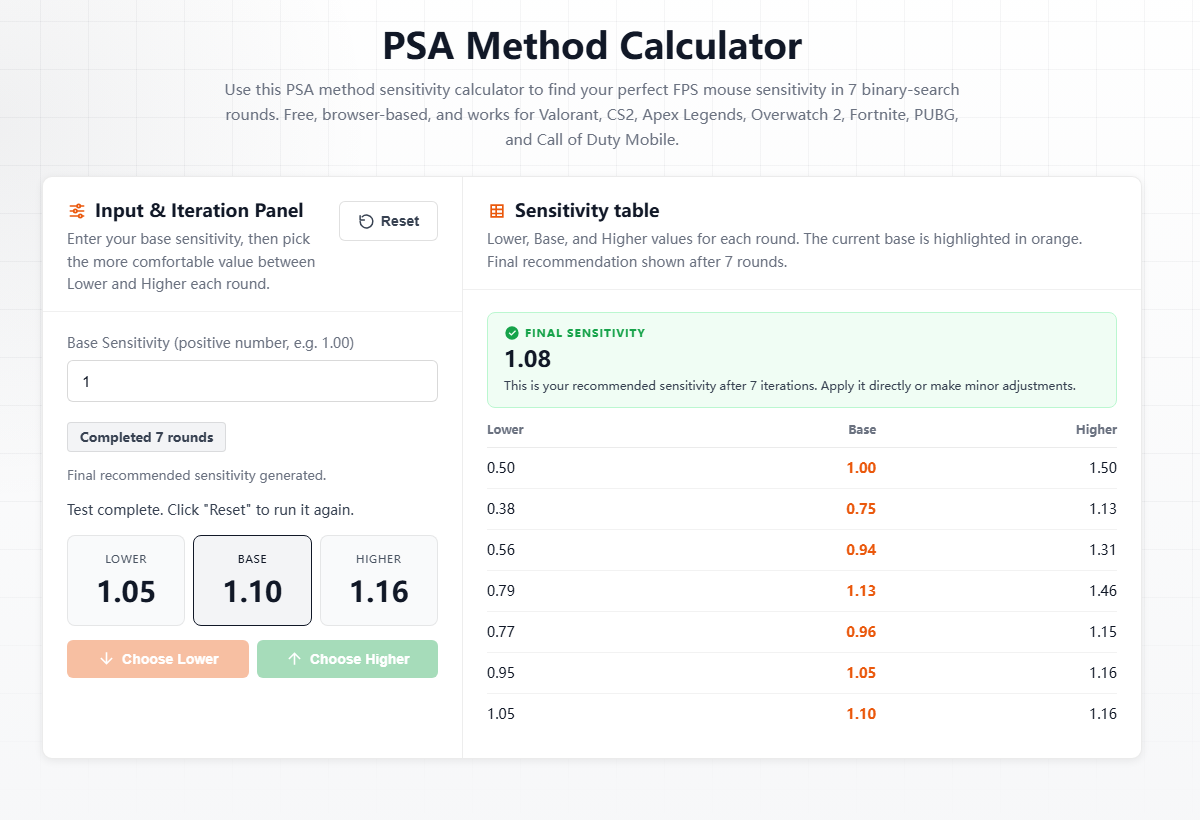
Here is a real example starting from 1.00. Each choice was made after testing the suggested values in-game.
| Round | Choice after in-game testing | Resulting base sensitivity |
|---|---|---|
| Start | Current CS2 sensitivity | 1.00 |
| 1 | Lower | 0.75 |
| 2 | Higher | 0.94 |
| 3 | Higher | 1.13 |
| 4 | Lower | 0.96 |
| 5 | Higher | 1.05 |
| 6 | Higher | 1.10 |
| 7 | Lower | 1.08 final |
What to do with the final value
Use the final sensitivity for a few matches or practice sessions before changing it again. The goal is not to chase a perfect number every day. The goal is to find a value that feels controlled, repeatable, and comfortable under real aiming conditions.
Common mistakes to avoid
The most common mistake is treating PSA like a calculator-only process. If you click Lower or Higher without testing, the result is just a sequence of guesses. Another mistake is changing several variables at once. If you change DPI, resolution, mousepad space, FOV, or crosshair during the same test, it becomes hard to know whether the sensitivity actually improved.
Avoid restarting after every bad round in a match. Real games include pressure, movement mistakes, bad positioning, and opponent timing. Use PSA to find a comfortable baseline, then practice with that baseline long enough to separate sensitivity problems from normal gameplay mistakes.
When should you run PSA again?
Rerun the process when your setup changes in a meaningful way: a new DPI value, a different mouse, a much larger or smaller mousepad, a new game profile, or a long break that changes how your aim feels. You can also rerun it if the final value still feels clearly too fast or too slow after several sessions. In that case, start from the current final value instead of jumping to a random number.
The final value is based on your own in-game testing, not a random formula. The calculator only works properly when each round is tested before you choose Lower or Higher.